SlimTide vs Ozempic: An Honest Look at an Ozempic Natural Alternative
Quick Answer: Is There a Natural Alternative to Ozempic?
No supplement copies Ozempic or its trial numbers — semaglutide averages about 15% body-weight loss and needs a prescription. A natural Ozempic alternative like SlimTide is a different tool: a stimulant-free, no-injection daily capsule that supports appetite control and a calorie-aware routine, at a fraction of the monthly cost, with a money-back guarantee.
- Ozempic is prescription-only, injected weekly, and often costs hundreds per month.
- SlimTide is over-the-counter, oral, stimulant-free, and sold with a guarantee.
- Expectations matter: a supplement supports the habit; it does not replace a drug.

If you have watched someone lose weight on a weekly injection and wondered whether there is a natural alternative to Ozempic you can take without a prescription, you are asking a fair question and you deserve a straight answer. This SlimTide vs Ozempic comparison exists to set realistic expectations rather than to sell you a fantasy. An Ozempic natural alternative like SlimTide is not a copy of a prescription medicine, and no capsule on the market can promise the same numbers a GLP-1 drug produces in a trial.
What a stimulant-free daily supplement can honestly do is different, and for a lot of people it is enough: support appetite control, make a calorie-aware routine a little easier to stick to, and do it without needles, clinic visits or a monthly bill in the hundreds. The rest of this article walks through what the Ozempic trials actually showed, where a supplement fits, and the three myths that trip people up when they compare the two.
How Ozempic actually works — and what the trials really show
Ozempic is a brand name for semaglutide, a GLP-1 receptor agonist. It mimics a gut hormone your body releases after eating, which slows how quickly the stomach empties and turns down appetite signals. Ozempic itself is approved for type 2 diabetes; the same molecule at a higher dose is sold as Wegovy for weight management. That distinction matters because the headline weight-loss figures people quote come from the higher-dose weight-management trials.
Those trials are genuinely impressive, and it would be dishonest to downplay them. On average, participants lost in the region of 15 percent of their body weight over roughly a year, on top of diet and activity changes. That is a scale of result no dietary supplement has ever demonstrated, and anyone telling you otherwise is either confused or selling something. If your goal is that magnitude of loss and you qualify medically, a GLP-1 is the tool built for the job, and the conversation to have is with a doctor, not a supplement label.
But the trial numbers come attached to conditions the marketing rarely leads with. You need a prescription, which means a clinician willing to write one and, often, criteria you have to meet. It is an injection, weekly, indefinitely — the weight tends to return when people stop. Side effects such as nausea are common, at least while the dose is being titrated. And without insurance coverage, the monthly cost frequently lands in the hundreds of dollars. None of that makes the drug bad; it makes it a serious commitment with a serious price tag, which is exactly why so many people go looking for an alternative in the first place.
Is there a natural alternative to Ozempic?
Here is the honest version. There is no supplement that reproduces semaglutide's mechanism or its results — if that is what you mean by "alternative," the answer is no, and you should be wary of any product that implies otherwise. What does exist is a different category of tool aimed at a different budget and a different level of commitment. A natural Ozempic alternative like SlimTide is a daily, oral, stimulant-free supplement designed to support the ordinary levers of weight management: feeling satisfied on less food, staying consistent with a calorie-aware routine, and supporting metabolic health as part of a broader effort.
Think of it this way. The drug is a powerful, expensive, prescription intervention. The supplement is an accessible daily habit that nudges the same behaviours the drug makes easier — appetite and consistency — without the needle, the prescription or the bill. It will not match the trial numbers. It was never going to. But for someone who was never a candidate for a GLP-1, or who simply does not want to inject a drug indefinitely, "a low-cost daily nudge" is a perfectly reasonable thing to want. The mistake is not choosing the supplement; the mistake is expecting the supplement to behave like the drug.
If you want the deeper version of this argument — where prescription options and over-the-counter formulas each genuinely make sense — our breakdown of prescription versus natural weight loss pills lays out the trade-offs without the hype.

Want the No-Prescription, No-Needle Option?
If a GLP-1 injection was never going to fit your budget or your comfort level, a stimulant-free daily capsule with a money-back guarantee is the low-risk way to test the appetite-and-consistency angle for yourself. See exactly what is on the label and what the current bundle pricing looks like before you decide.
SlimTide vs Ozempic: an honest side-by-side
Comparisons like this are usually rigged to make the sponsor win. This one is not, because the two products are not really competing for the same job. Read the table as "which tool fits which situation," not "which one is better."
| Ozempic (semaglutide) | SlimTide | |
|---|---|---|
| What it is | Prescription GLP-1 medication | Over-the-counter dietary supplement |
| Trial weight loss | ~15% of body weight (weight-management dose) | No drug-scale evidence; supports routine |
| How you take it | Weekly self-injection | Daily oral capsule, stimulant-free |
| Access | Prescription and clinician required | No prescription; buy direct |
| Typical cost | Often hundreds per month uninsured | Lower; bundles cut the per-bottle price |
| Risk if it disappoints | Time, appointments, side effects | Money-back guarantee window |
| Best for | Larger, medically supervised loss | Low-cost daily appetite and habit support |
Two rows carry most of the honesty. The "trial weight loss" row is where the drug is simply in another league, and no bundle discount changes that. The "risk if it disappoints" row is where the supplement quietly wins: a guaranteed trial means the worst case is a refund and a few weeks, not a course of injections you did not tolerate.
Three myths about switching from Ozempic to a supplement
Myth one: "A natural supplement is basically Ozempic without the prescription." It is not, and any marketing that says so is the reason this category has a trust problem. The two do not share a mechanism, a dose, or an evidence base. A supplement is a habit-support tool. Frame it that way and it can genuinely help; frame it as a needle-free clone and you have set yourself up to feel cheated.
Myth two: "If it doesn't cause 15% loss, it's useless." This mistakes the supplement's job. Most real-world weight change comes from eating a little less and moving a little more, sustained over months. The hard part is never knowing what to do — it is consistency. Something that blunts appetite spikes and makes a calorie-aware day easier to repeat is not useless just because it is not a drug; it is working on the exact bottleneck most people actually hit.
Myth three: "I can just stop my prescription and swap to the capsule." Please do not do this on your own. If a doctor prescribed you a GLP-1 or any other medication, changing it is a conversation for the prescriber, on their timetable. A supplement is an option for people who were not going to take the drug, or who are choosing between over-the-counter products — not a self-directed substitute for a medicine already in your routine.
Who an Ozempic natural alternative actually suits
Being specific here is more useful than a blanket pitch. A supplement like SlimTide tends to make sense for the person who has a modest amount to lose and mostly needs help staying consistent; the person who was never medically eligible for a GLP-1 and does not want to pursue one; the person who is uncomfortable with weekly injections or the open-ended cost; and the person who wants to test a low-commitment daily habit before considering anything bigger. If you see yourself in those descriptions, an over-the-counter option is a rational first step rather than a compromise.
It suits you less well if you have a large amount of weight to lose under medical guidance, if a clinician has already recommended a specific treatment, or if you are looking for something to do the work while your eating stays unchanged. No capsule out-runs the kitchen. Before you buy anything, it is worth reading a few grounded, non-hyped SlimTide reviews that discuss whether it actually works so your expectations start in the right place.
How to give SlimTide a fair test
If you decide to try the supplement route, test it like you would test anything: with a defined window and a way to measure. Give it eight to twelve weeks, because that is roughly how long it takes for an appetite-and-consistency effect to show up as a change on the scale or in how clothes fit. Take it daily as directed — intermittent use tells you nothing. Pair it with one honest dietary change rather than a total overhaul, so you can actually attribute what happens. And write down a few simple markers at the start: weight, waistband, and how hungry you feel mid-afternoon.
Because that honest test window is a couple of months long, a single bottle is rarely the sensible way to run it, and the per-bottle economics reward buying the trial in one go. We work through exactly how the numbers land in our SlimTide cost and value breakdown, including how the bundle pricing compares to a month of a prescription option. The short version: the guarantee is what makes the test low-risk, so buying direct from the official store is the part you should not skip.
Common questions
Is there a natural alternative to Ozempic?
There is no supplement that copies the drug semaglutide, so nothing over the counter reproduces Ozempic's mechanism or its trial results. What exists is a different tool for a different budget: stimulant-free daily supplements such as SlimTide that aim to support appetite control and a calorie-aware routine without a prescription, an injection or a monthly clinic bill. Treated as an honest, low-cost daily habit rather than a drug substitute, that is a reasonable option for many people. Treated as a needle-free copy of Ozempic, it will disappoint.
Can a supplement replace Ozempic?
No dietary supplement can replace a prescription medicine, and you should never stop a drug a doctor prescribed without speaking to them first. Ozempic works through a specific hormonal pathway that a capsule does not act on in the same way, so the honest framing is not replacement but alternative: if you were never going to start a GLP-1 in the first place, a daily supplement is a lower-cost, lower-commitment way to support the eating and activity changes that do the real work.
How much weight can you lose on Ozempic vs supplements?
In clinical trials, semaglutide at a weight-management dose produced average reductions of roughly 15 percent of body weight over about a year, alongside diet and activity changes. No supplement has evidence anywhere near that figure, and any product claiming similar numbers is overpromising. A supplement's honest role is to make a calorie-aware routine a little easier to stick to; the weight change still comes from the routine, not the capsule, and results vary widely from person to person.
Is SlimTide cheaper than Ozempic?
Almost always, yes. Branded GLP-1 medications commonly run into the hundreds of dollars a month without insurance coverage, plus the cost of prescribing appointments. SlimTide is an over-the-counter supplement sold directly, with multi-bottle bundles that lower the per-bottle price and a money-back guarantee that caps your downside. The two are not equivalent in what they do, but on cost per month there is no contest. Check the current pricing on the official store, since bundle offers change.
Related reading

Prescription vs Natural Weight Loss Pills
Where a GLP-1 drug earns its cost and where an over-the-counter formula is the smarter first step.

Best Weight Loss Pills of 2026, Compared
How the leading over-the-counter options stack up on transparency, dosing and price.
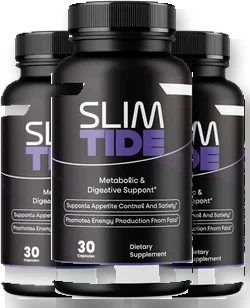
SlimTide Cost and Value Breakdown
Per-bottle pricing, bundle math, and how cost-per-day compares to a prescription month.

SlimTide Reviews: Does It Work?
A grounded look at what to realistically expect over an eight-to-twelve-week trial.
References and further reading
- U.S. Food and Drug Administration — medications containing semaglutide for type 2 diabetes and weight loss
- New England Journal of Medicine — STEP 1 trial of once-weekly semaglutide for weight management
- National Institute of Diabetes and Digestive and Kidney Diseases — prescription medications for overweight and obesity
- NIH Office of Dietary Supplements — dietary supplements for weight loss, evidence for health professionals
- Centers for Disease Control and Prevention — healthy, sustainable approaches to losing weight
General information, not medical advice. These statements have not been evaluated by the Food and Drug Administration, and no dietary supplement is intended to diagnose, treat, cure or prevent any disease. Do not start, stop or change a prescription medication without speaking to the clinician who prescribed it.
Affiliate link. Slimtiade Label Notes earns a commission on purchases made through it, at no extra cost to you. We are not the manufacturer.