CFU vs mg: How to Actually Read a Probiotic Label
Quick Answer: What Is the Difference?
Milligrams tell you the mass of powder in the capsule. CFU — colony-forming units — tells you how many organisms in that powder are alive and able to reproduce. Powder contains carriers, stabilisers and dead cells as well as live ones, so the two figures are not convertible. A label that gives you only milligrams has told you what you are swallowing but not how much of it is doing anything.
- mg = mass, including everything that is not a live organism.
- CFU = the count that clinical trials are actually run in.
- Blend totals hide the split between strains entirely.
Why the industry uses two units at all
Supplement Facts panels are built for nutrients, and nutrients are measured by weight. Vitamin C in milligrams, magnesium in milligrams, fibre in grams — the format works. Live bacteria break that model, because their usefulness has nothing to do with how much they weigh and everything to do with how many of them survive to reach your colon. So the industry evolved a second unit, CFU, and then never fully standardised which one appears on the panel. The result is a label format where the fibre in a product is precisely comparable to the research and the bacteria in the same product frequently are not.
What a milligram figure actually contains
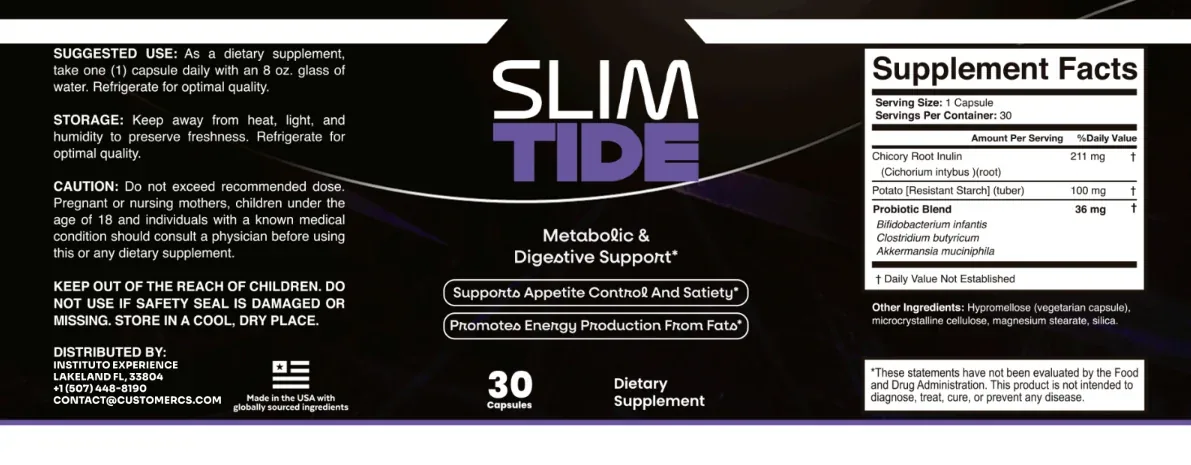
Freeze-dried bacterial powder is mostly not bacteria. It contains cryoprotectants that helped the cells survive drying, a carrier such as maltodextrin or cellulose to make a tiny quantity of organisms handleable at manufacturing scale, and the remains of cells that did not survive the process. All of that has mass. All of it counts toward the milligram figure on the panel. Two products both declaring “probiotic blend 36 mg” can differ by a factor of a hundred in live organisms and both labels are accurate.
A worked example
| Label says | What you can conclude |
|---|---|
| “Probiotic blend 36 mg” | The mass. Nothing about viability or the split between strains. |
| “10 billion CFU” | A count — but of the blend as a whole, not per strain. |
| “B. infantis 5 billion CFU, A. muciniphila 5 billion CFU” | The gold standard. You can now compare against a specific trial. |
| “10 billion CFU at time of manufacture” | The count on the day it was made, not on the day you swallow it. |
The “at time of manufacture” escape hatch
This phrase deserves its own paragraph. Live cultures decline from the moment they are packed. A count guaranteed at manufacture tells you nothing about what remains at the end of a shelf life that may run two years, particularly if the bottle spent a summer in a warehouse. The more informative phrasing is a count guaranteed through expiry, or “at best-before date”. When a label offers only the manufacture figure, the honest reading is that the company has not committed to a number for the product you are holding.
Why the strain split matters more than the total
Probiotic research is strain-specific to an almost pedantic degree. A finding for Lactobacillus rhamnosus GG does not transfer to a different L. rhamnosus strain, let alone to a different species. So when a product blends three organisms and gives you one number for all three, the number cannot be mapped onto any trial. If the interesting strain in the blend — the one you bought the product for — makes up a tenth of the mass, the panel will look identical to a version where it makes up nine tenths.
Four questions to ask any probiotic panel
- Is each organism named to genus, species and ideally strain? “Probiotic complex” is not an ingredient, it is a way of not naming one.
- Is there a CFU figure at all? If the answer is only milligrams, you cannot compare the product to research.
- Is the CFU per strain or for the blend? Per strain is what the literature is written in.
- Is the count guaranteed through expiry? If it is guaranteed at manufacture, discount it.
What this means in practice
Very few products on the shelf answer all four questions well, and a product can still be worth taking while answering only two of them. Naming the organisms — which the SlimTide panel does, listing Bifidobacterium infantis, Clostridium butyricum and Akkermansia muciniphila explicitly — is meaningfully better than a proprietary blend that names nothing. Declaring the trio as a combined 36 mg without CFU is meaningfully worse than a per-strain count. Both things are true at once, and a review that mentions only one of them is selling you something.
One thing milligrams are good for
Prebiotic fibre. Inulin and resistant starch are not alive, so mass is exactly the right unit and the number on the panel is directly comparable to a study. If a label gives you 211 mg of chicory inulin, you can go and read what happened at 5 g and at 200 mg and draw your own conclusion. That comparison is available to you for the fibre half of a synbiotic formula, and generally not for the bacterial half. Use it.
Common questions
Is a higher CFU always better?
No. Above a certain point more organisms does not mean more effect, and very high counts can worsen initial gas. Matching the count used in research for that specific strain is more informative than chasing the biggest number.
Can I convert milligrams to CFU?
No. The ratio depends on the drying process, the carrier and the strain. Any conversion you see quoted is a guess.
Does the capsule type matter?
It can. Delayed-release and acid-resistant shells are designed to get more organisms past stomach acid. A plain shell relies on sheer numbers instead.
General information, not medical advice. These statements have not been evaluated by the Food and Drug Administration, and no dietary supplement is intended to diagnose, treat, cure or prevent any disease. Speak to a qualified healthcare professional before changing what you take.
See the official SlimTide offer
Affiliate link. Slimtiade Label Notes earns a commission on purchases made through it, at no extra cost to you. We are not the manufacturer.