Gut Health Supplements After Gallbladder Removal: What Actually Helps
Quick Answer: What Changes, and What Is Worth Taking
After your gallbladder is removed, bile no longer pools and concentrates between meals — it drips into the small intestine continuously instead. That mostly affects how you handle large amounts of fat in one sitting, and for a minority of people it loosens stool for months afterwards. The supplements with the clearest rationale in that situation are soluble fibre and, if your intake has genuinely dropped, the fat-soluble vitamins; almost everything else marketed for this moment is speculative.
- Start with food. Smaller fat portions spread across the day beat any capsule.
- Soluble fibre first. It adds form and slows transit; introduce it slowly.
- Persistent symptoms are a clinician question, not a shopping question.

What the gallbladder actually did — and what it did not
A great deal of confusion downstream of this operation comes from one misunderstanding: people assume the gallbladder made bile. It did not. The liver makes bile continuously, around the clock, whether you have eaten or not. The gallbladder was a holding tank with a squeeze mechanism. It took that steady trickle, concentrated it by pulling water out, and then released a strong, well-timed bolus when a fatty meal arrived in the duodenum.
Remove the tank and the plumbing still works, but the timing goes. Bile now arrives in a thin, constant stream. For most meals this is genuinely fine, which is why the majority of people eat normally within a few months and never think about it again. Where it shows up is at the extremes: a very large fatty meal has less concentrated bile waiting to meet it, and between meals there is bile in the intestine when there is nothing much to emulsify. Those two facts explain nearly every symptom people search about afterwards, and they also explain why the supplement aisle has so little to offer here.
The first eight weeks: fat first, fibre second
Almost every surgical team gives some version of the same advice for the first stretch: keep meals small, keep fat modest, and add things back one at a time. This is not a permanent diet and it is not a moral position about fat. It is a way of not overwhelming a system that has lost its buffer while the incisions heal and the bile ducts adapt.
The practical version looks like four or five smaller meals rather than two large ones, fat spread across all of them instead of concentrated in one, and a fortnight or so of boring food before you test anything ambitious. Fried food, heavy cream sauces and very rich desserts are usually the first things to cause trouble and the last things to come back comfortably. Notably, none of that requires buying anything.
Fibre is the second phase and it deserves its own paragraph, because the instinct is often to add it too early. Fermentable fibres such as inulin feed bacteria, and bacterial fermentation produces gas. In week two after abdominal surgery, gas is both uncomfortable and difficult to interpret — you cannot tell whether what you are feeling is the fibre, the healing, or something that warrants a phone call. Waiting until ordinary meals feel routine again, then adding one fibre at a low dose, gives you information instead of noise.
Gut health supplements after gallbladder removal: what the evidence shows
Here is the honest state of play. There is no supplement category with a strong, specific, well-replicated evidence base for people who have had a cholecystectomy. The research that exists is mostly small, mostly short, and mostly conducted in general populations rather than in post-surgical ones. Anyone selling you certainty here is selling you something. What we have instead are a handful of ingredients with a plausible mechanism, a reasonable safety record and evidence in adjacent populations.
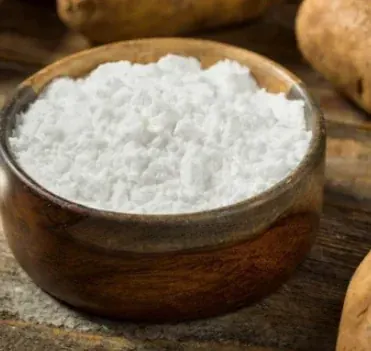
Soluble fibre has the best rationale of the group. Psyllium, partially hydrolysed guar gum and, more gently, inulin and resistant starch all bind water and add structure to stool. If your complaint after surgery is that things move too fast and too loose, adding something that holds water is at least mechanistically sensible. Fibre is also the ingredient class where the label is honest: fibre is measured by weight, not by living-organism counts, so the number on the panel is directly comparable to the number used in published research.
Probiotics are more speculative. The gut microbiome does shift when bile flow patterns change — bile is antimicrobial and shapes which organisms thrive where. It is reasonable to hypothesise that supporting that community helps. It is not reasonable to state it as fact, because the trials that would settle it in this specific population have largely not been run. If you try one, treat it as an experiment with a defined stopping point, not as a permanent commitment.
The fat-soluble vitamins — A, D, E and K — are worth a mention for a narrow group. They need fat and bile to be absorbed properly. If you have spent months eating a genuinely low-fat diet, or if you have ongoing malabsorption that a clinician has identified, this is a sensible thing to test for rather than guess at. A blood test costs less than a year of guessing, and it tells you whether the problem is real.
The most useful thing to understand about the supplement aisle here is that it is answering a question the research has not answered. That does not make every product useless. It does mean the burden of proof sits with the seller, and honest sellers say so on the label.
Where SlimTide Fits
SlimTide is a synbiotic — prebiotic fibres alongside named bacterial strains — rather than anything designed for post-surgical use. If you are already researching the best gut health daily supplement to sit alongside a rebuilt eating pattern, the panel is worth reading line by line before you decide. Our full breakdown of what is on the SlimTide label covers the doses that are declared and the ones that are not.
Comparing the options honestly
The table below is deliberately blunt about evidence strength. “Indirect” means the ingredient has been studied, but not in people who have had this operation. “Speculative” means the mechanism is plausible and the human data in this context is thin or absent.
| Option | Typical form | Common starting dose | Evidence in this situation |
|---|---|---|---|
| Psyllium husk | Powder or capsule | About 3–5 g once daily, with water | Indirect — well studied for stool form generally |
| Partially hydrolysed guar gum | Flavourless powder | About 5 g daily | Indirect — low-gas alternative to psyllium |
| Chicory inulin | Powder or capsule | 1–3 g, building slowly | Indirect — prebiotic data in general populations |
| Resistant starch | Powder, or cooled cooked starches | 2–5 g daily | Indirect — fermentation data, little post-surgical work |
| Multi-strain probiotic | Capsule, CFU-declared | Whatever the specific strain was studied at | Speculative in this population |
| Ox bile / bile salts | Capsule | Varies widely between products | Speculative — discuss with a clinician first |
| Fat-soluble vitamins | Softgel | Guided by a blood test | Situational — only if a deficiency is shown |
What these supplements cannot do
This section matters more than the shopping list. No fibre, probiotic or enzyme product can restore the gallbladder's timing function. Nothing in a capsule concentrates bile the way that organ did. If a product's marketing implies otherwise, that is a claim the evidence does not support and, in most jurisdictions, one a supplement is not permitted to make.
Nor can any of this diagnose you. Persistent loose stools after gallbladder removal have a recognised clinical explanation in a proportion of cases, and there are prescription options a doctor can consider. Spending six months cycling through fibre products while that goes unexamined is the genuinely expensive mistake here. The same is true of pain: ongoing right-sided or upper abdominal pain after this surgery is a reason to be seen, not a reason to search harder for a supplement.
There is also a plain limit on weight. People often arrive at this topic having gained or lost weight around the surgery, and the supplement market is happy to meet them there. A prebiotic fibre may support appetite regulation and stool regularity; it does not remove the need for the eating pattern underneath. Any product implying otherwise is overselling.
Building a routine you will actually keep
The failure mode we see most often is enthusiasm. Someone finishes recovery, decides to fix everything at once, and starts four products in the same week. When something goes wrong — and with fermentable fibre something usually does at first — there is no way to tell which product caused it, so the whole stack goes in the bin and the useful one goes with it.
A better sequence is almost boringly slow. Get ordinary meals stable first. Add one product. Use the lowest dose on the label for a week, then the normal dose for another two or three. Write down what happened, in the crudest possible terms — stool form, gas, energy, whether your clothes fit differently. Only then decide whether to keep it, and only then consider a second product. Anyone comparing options for the best gut health supplement for bloating and constipation will get far more out of one product tested properly than four tested together.
Two more practical points. Take fibre with genuinely enough water, because a fibre that gels without adequate fluid makes constipation worse rather than better. And separate fibre from any prescription medication by a couple of hours, since bulking agents can slow absorption — your pharmacist will tell you exactly which of your medicines this applies to, and it takes one phone call.
Reading the panel before you buy
Whichever direction you go, the Supplement Facts panel decides whether you are buying something comparable to research or something comparable to marketing. Fibres are declared by weight, which is the right unit and lets you check a dose against published work. Live organisms are a different problem — a milligram figure for a bacterial blend tells you the mass of powder, not how many organisms are alive in it. We walk through that distinction in detail in our note on CFU versus milligrams on a probiotic label, and it is the single most useful skill to have before you spend anything.
Three questions cover most of it. Is every ingredient named and dosed individually, or hidden inside a proprietary blend total? Is the fibre dose in the same neighbourhood as the studies you have read, or a token amount? And does the seller describe the evidence honestly, or does the page read as though every question has been settled? Products that pass those three tests are a small minority, which is itself worth knowing when you are comparing where to buy weight loss supplements and every page claims to be the obvious choice.
Common questions
How long after surgery should I wait before starting a fibre supplement?
Most surgical teams ask you to stay on plain, low-fat food for the first two to four weeks while the incisions settle. Adding a fermentable fibre during that window makes gas harder to interpret, so it is usually easier to wait until ordinary meals feel normal again and then introduce one product at a time. Ask the team that did your operation, because their timeline overrides any general guidance.
Do I need to take digestive enzymes for the rest of my life?
Usually not. The gallbladder stored and concentrated bile, it did not make it, so the liver keeps producing bile after the organ is gone. Most people adapt over several months and eat normally without any enzyme product. Ongoing symptoms are worth investigating with a clinician rather than managing indefinitely with an over-the-counter capsule.
Is soluble or insoluble fibre better after gallbladder removal?
Soluble fibre is the one most often suggested first, because it holds water and adds form to loose stool. Insoluble fibre mainly adds bulk and speed, which is the opposite of what most people want in the early months. Many products contain both, so the label matters more than the marketing on the front of the tub.
Can a supplement stop the loose stools some people get after surgery?
No supplement should be presented as a fix for that. Persistent loose stools after gallbladder removal can have a specific cause that a clinician can identify and address with prescription options. Soluble fibre may help with stool form for some people as general support, but it is not a substitute for getting the cause identified.
References and further reading
- National Institute of Diabetes and Digestive and Kidney Diseases — gallstones and gallbladder background
- Mayo Clinic — cholecystectomy: what the procedure involves and what to expect
- Harvard T.H. Chan School of Public Health — dietary fibre, soluble and insoluble
- National Center for Complementary and Integrative Health (NIH) — probiotics: what the evidence does and does not show
- PubMed — the published literature on cholecystectomy and gut microbiota
General information, not medical advice. These statements have not been evaluated by the Food and Drug Administration, and no dietary supplement is intended to diagnose, treat, cure or prevent any disease. Speak to a qualified healthcare professional before changing what you take.
Affiliate link. Slimtiade Label Notes earns a commission on purchases made through it, at no extra cost to you. We are not the manufacturer.